

Legacy POS vs Modern Retail Cloud POS Systems
This guide compares legacy POS systems with modern retail POS software and explains why many retailers are investing in cloud POS system modernization.
Retailers today face increasing pressure to deliver seamless customer experiences across stores, digital channels, fulfillment locations, and customer service touchpoints. Yet many organizations still rely on legacy point of sale systems that were designed for a different era of retail.
Modern retail operations require a cloud-based point of sale platform that can connect commerce channels, provide real-time visibility, support store associates, and adapt quickly to changing business requirements.
This guide compares legacy POS systems with modern retail POS software and explains why many retailers are investing in cloud POS system modernization.
What Is a Legacy POS System?
A legacy POS system is a traditional point of sale platform built on older technology architectures, often requiring on-premises infrastructure, complex integrations, manual updates, and significant IT support.
Many legacy retail POS systems were designed primarily to process transactions within individual stores. As retail evolved toward omnichannel fulfillment, mobile shopping, curbside pickup, ship-from-store, and endless aisle experiences, these systems often struggled to keep pace.
Common characteristics of a legacy POS system include:
- Store-centric architecture
- Limited cloud capabilities
- Batch-based data synchronization
- Multiple disconnected retail applications
- Costly upgrades and maintenance cycles
- Limited support for omnichannel commerce
While these systems may continue to process transactions, they can create operational complexity and limit innovation.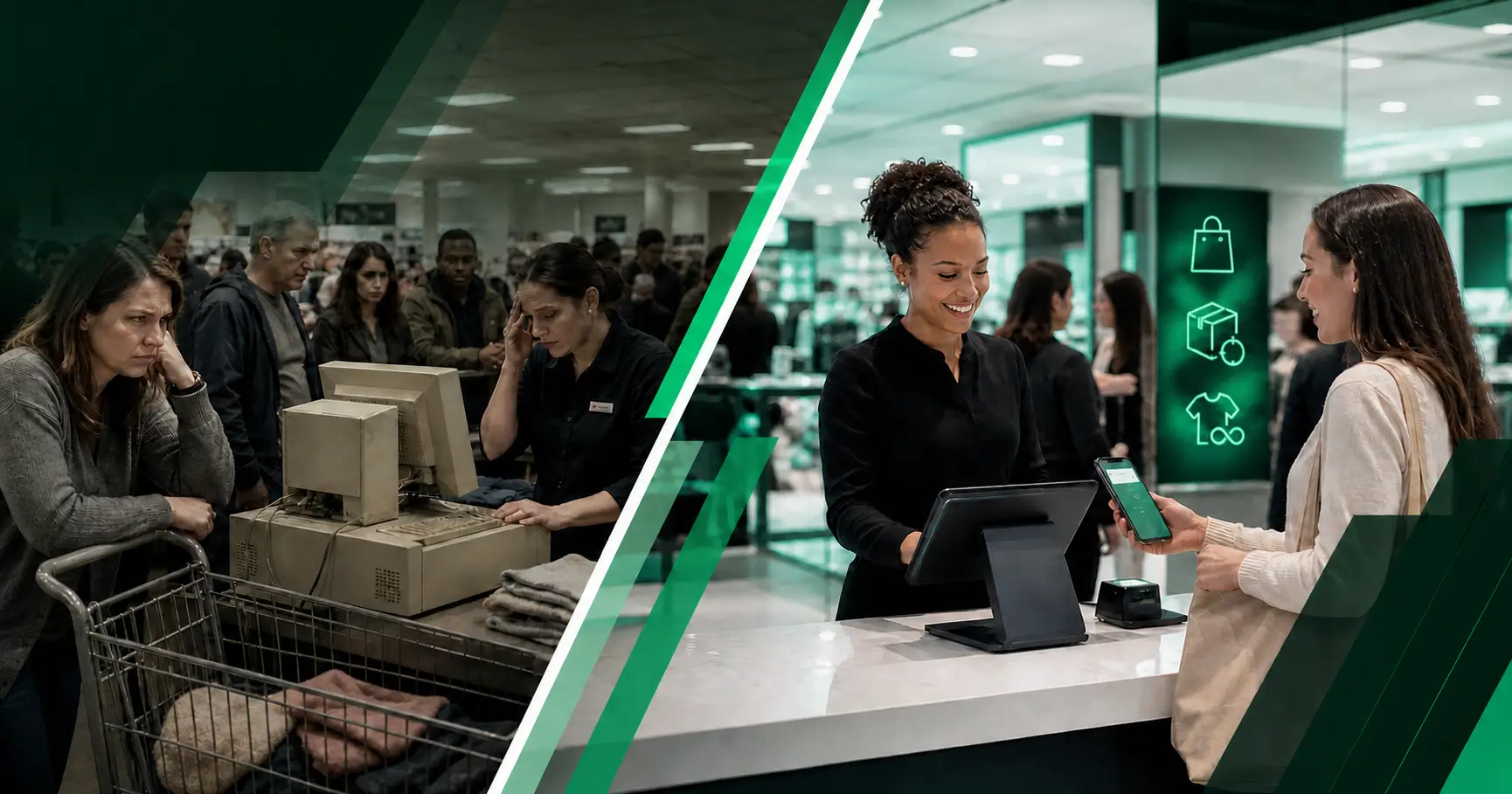
Key Limitations of Legacy POS Systems
Retailers evaluating a legacy POS system replacement often encounter several challenges.
Limited Omnichannel Visibility
Traditional POS platforms typically operate independently from inventory, order management, and fulfillment systems. This can make it difficult for associates to access accurate inventory availability and customer information across channels.
Complex Integrations
Legacy environments frequently rely on multiple point-to-point integrations between POS, inventory, ecommerce, customer service, and back-office applications. These integrations increase maintenance requirements and reduce agility.
Slow Innovation Cycles
Many traditional POS solutions require major upgrades to access new functionality. Retailers may postpone updates due to cost, risk, or operational disruption.
Inconsistent Customer Experiences
When systems are disconnected, customers may encounter inconsistent pricing, promotions, loyalty information, inventory availability, and fulfillment options across channels.
Higher IT Costs
Maintaining aging infrastructure, custom integrations, and multiple software versions can increase total cost of ownership while reducing business flexibility.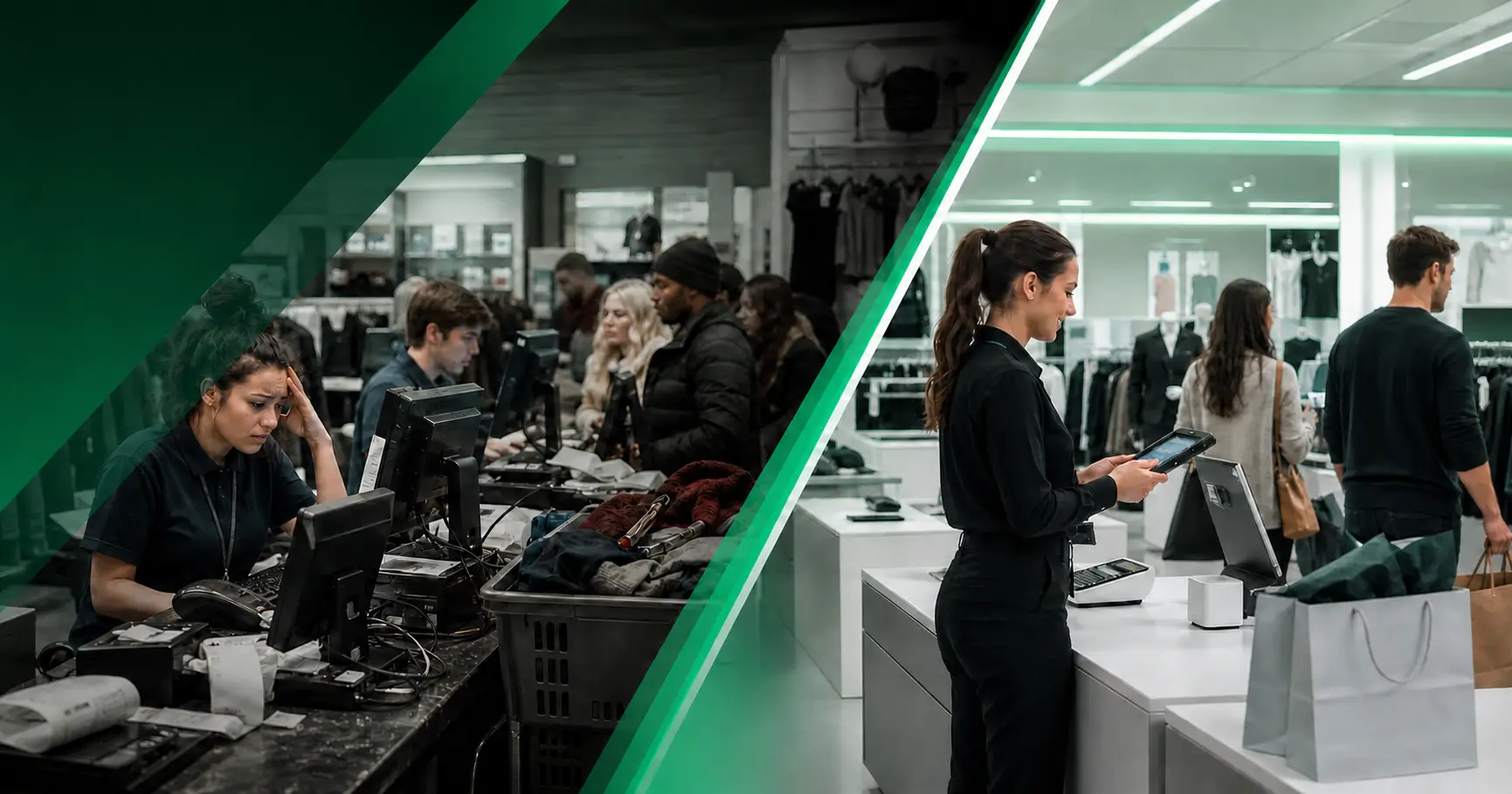
What Is a Modern Retail POS Platform?
A modern retail POS platform is a cloud-native, enterprise POS solution designed to support unified commerce operations.
Unlike traditional systems, modern retail POS software connects stores, ecommerce, inventory, fulfillment, customer engagement, and order management through a shared technology foundation.
Key characteristics include:
- Cloud-based point of sale architecture
- Real-time inventory visibility
- Mobile POS capabilities
- Omnichannel point of sale functionality
- Unified customer profiles
- Enterprise-wide promotion management
- Continuous software updates
- API-first extensibility
Modern POS platforms help retailers deliver consistent experiences regardless of how customers choose to shop.
Legacy POS vs Modern POS: Key Differences
|
Capability |
Legacy POS System |
Modern Cloud POS System |
|
Deployment |
On-premises |
Cloud-native |
|
Updates |
Major upgrade projects |
Continuous updates |
|
Data Visibility |
Store-specific |
Enterprise-wide, real-time |
|
Omnichannel Support |
Limited |
Built-in unified commerce capabilities |
|
Integration Requirements |
Extensive |
Unified platform architecture |
|
Customer Experience |
Channel-specific |
Consistent across channels |
|
Scalability |
Hardware-dependent |
Elastic cloud scalability |
|
Innovation Speed |
Slow |
Continuous innovation |
For retailers conducting a POS system comparison, retail organizations increasingly prioritize agility, scalability, and unified commerce capabilities over traditional transaction processing alone.
Benefits of Upgrading to a Modern POS System
Understanding the POS system upgrade benefits can help retailers build a modernization strategy. Upgrading your POS system not only streamlines operations but also enhances customer engagement, improves data accuracy, and supports integration with emerging technologies—key factors in driving retail growth and competitiveness.
Deliver Unified Commerce Experiences
A unified commerce POS enables retailers to connect stores, ecommerce, fulfillment, and customer service operations through a common platform. This integration streamlines processes, offering a seamless shopping experience across all channels while providing real-time inventory visibility and consistent customer engagement.
Improve Associate Productivity
Store associates gain access to inventory availability, customer information, fulfillment options, and transaction history from a single interface. By streamlining workflows and providing real-time data insights, associates can serve customers more efficiently, reduce wait times, and focus on personalized engagement. This enhanced access empowers them to make quicker decisions and resolve issues swiftly, ultimately boosting overall store performance.
Increase Operational Agility
Cloud POS systems allow retailers to deploy new capabilities more quickly without large-scale upgrade projects.Increasing operational agility through cloud POS systems means retailers can respond to customer demands and market changes with greater speed and flexibility. By leveraging cloud technology, these systems enable seamless integration with various tools and real-time data access, empowering businesses to adapt swiftly in a competitive market.
Enhance Inventory Visibility
Real-time inventory visibility supports more accurate fulfillment decisions and better customer experiences. Improving inventory visibility allows businesses to track stock levels in real time, optimize replenishment processes, and minimize stockouts or overstock situations. By leveraging advanced tracking systems and integrating data across all sales channels, companies can gain a comprehensive view of their inventory, enabling better decision-making and increased operational efficiency.
Reduce Technology Complexity
Replacing multiple disconnected systems with a modern enterprise POS platform can simplify operations and reduce integration challenges. Simplifying technology systems is essential for improving operational efficiency and reducing the burden on IT teams. By consolidating platforms, streamlining processes, and adopting standardized solutions, organizations can minimize errors, lower maintenance costs, and accelerate deployment times. This approach not only enhances user experience but also frees up resources to focus on innovation and strategic initiatives, creating a more agile and resilient technology environment.
Support Future Growth
Modern retail POS features help retailers adapt to new customer expectations, sales channels, and fulfillment models. By leveraging cloud-based systems, mobile payment options, and real-time inventory management, modern POS solutions empower retailers to deliver seamless shopping experiences across all platforms.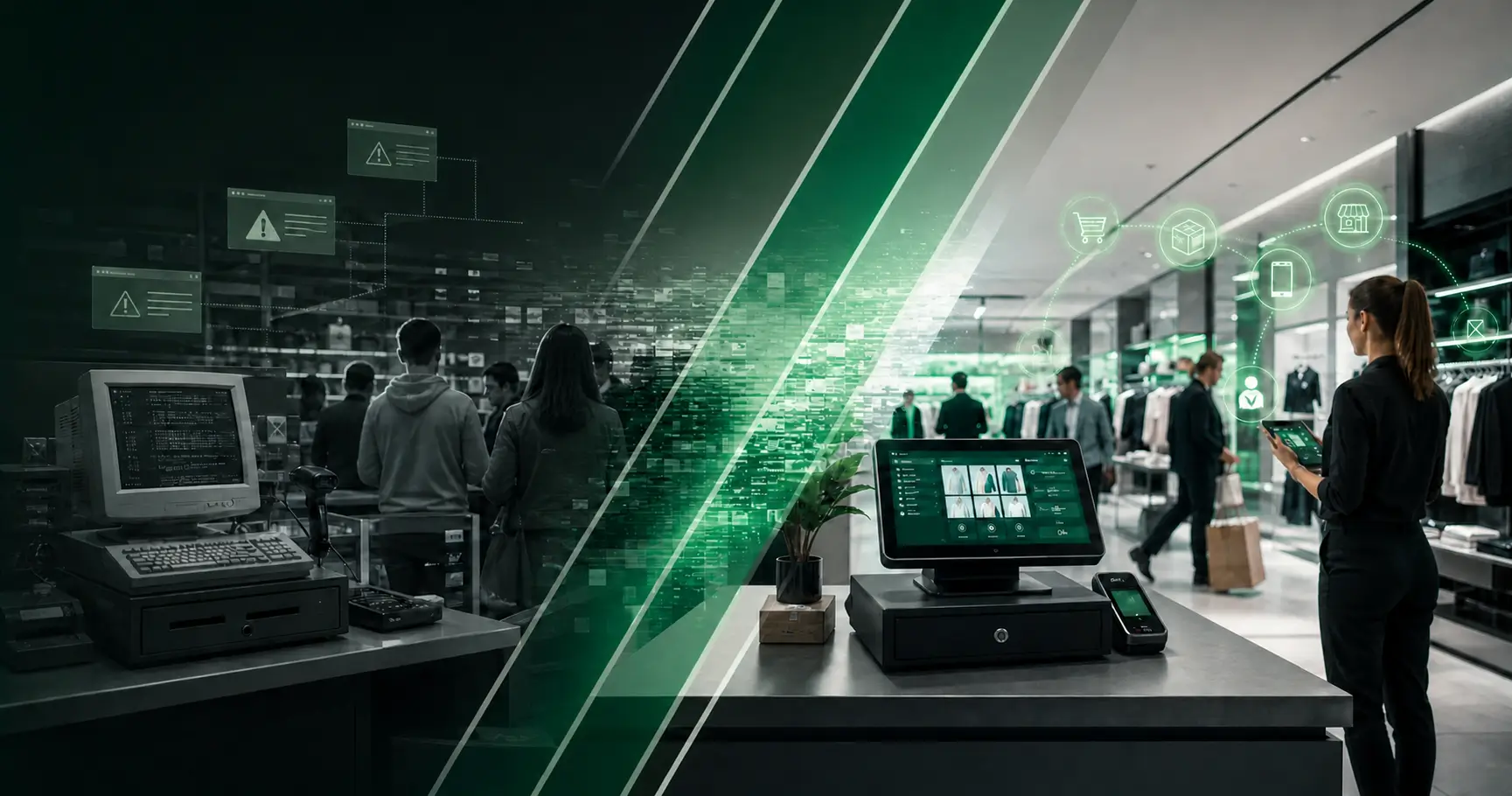
When Should Retailers Replace Legacy POS?
Retailers should consider a legacy POS system replacement when they experience:
- Rising maintenance costs
- Difficulty supporting omnichannel fulfillment
- Slow deployment of new capabilities
- Limited integration flexibility
- Inconsistent customer experiences
- Lack of real-time inventory visibility
- Challenges scaling store operations
If a point of sale system is limiting innovation or creating operational complexity, modernization may provide significant long-term value.
How Manhattan Supports POS Modernization
Manhattan Active® Point of Sale helps retailers move beyond traditional POS limitations with a cloud-native, unified commerce POS platform.
Built on the Manhattan Active® Platform, the solution connects point of sale, order management, inventory, fulfillment, customer engagement, and store operations through a single cloud-native architecture.
With Manhattan, retailers can:
- Deliver seamless omnichannel point of sale experiences
- Access enterprise-wide inventory visibility
- Empower associates with real-time customer and order information
- Eliminate disruptive upgrade cycles
- Simplify technology environments through platform unification
- Support enterprise-scale retail operations
For retailers evaluating modern POS vs legacy POS solutions, Manhattan provides a unified commerce platform designed to help stores operate more efficiently while delivering exceptional customer experiences.
Let’s make your stores unstoppable.
Whether you're solving problems or building for the future, Point of Sale is here to help. Schedule a demo or connect with our experts to get started.